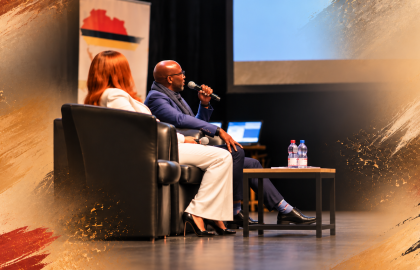
Let’s start with the title of the concert: what does ‘Rumba Na Lola’ mean?
Klay Mawungu: ‘The word Lola means paradise in Lingala. Rumba Na Lola thus takes on the meaning of rumba in paradise, or even rumba in the North, in reference to its journey to Europe and the roots it has put down there.’
The guitar plays a central role in Congolese rumba. What makes its playing style so distinctive?
Mawungu: ‘What makes Congolese guitar playing unique is its ability to draw inspiration from local traditional music while incorporating certain foreign influences, yet retaining a distinctly Congolese identity and character. Mastering it therefore requires a genuine understanding of this culture and a deep immersion in it.’
How did rumba become a music of emancipation and independence?
Mawungu: ‘In the face of colonial oppression, rumba gradually emerged as a powerful means of speaking out and raising awareness, but also as a genuine cry for freedom and a way of asserting cultural identity and affirming the dignity of the Congolese people. The famous song Indépendance Cha Cha is an emblematic example.’
What shared history do Congolese rumba and Belgium have?
Mawungu: ‘It was through the determination of the Congolese themselves that rumba made its way into Europe, via Belgium, in 1960. It was in Belgium that Indépendance Cha Cha was composed by the musicians of African Jazz, the first Congolese rumba orchestra to perform on Belgian soil that same year.
In the years that followed, the Belgicains – a term used to describe Congolese people who came to study at Belgian universities – formed several musical groups. Some of them would have a decisive influence on rumba, particularly on the bands formed by young musicians, including Zaïko Langa Langa.’
How does rumba continue to evolve and influence the contemporary music scene, particularly through artists such as Fally Ipupa or musical movements such as ndombolo?
Mawungu: ‘Congolese rumba continues to evolve and constantly reinvents itself, incorporating sounds from other musical worlds. This creative energy has given rise to a remarkable flourishing of artistic activity, both in Kinshasa and within the Congolese diaspora.
Younger generations identify deeply with rumba, draw inspiration from it and make it their own, bringing their own sensibilities and creativity to it, much as Zaïko Langa Langa did in the early 1970s, breathing new life into Congolese music.
As Papa Wemba so aptly put it: “Rumba will never get wrinkles.” A phrase that perfectly captures the eternal youth of this music and its ability to transcend generations without losing its soul.’