
Beauty and Ugliness in the Renaissance
Beauty and ugliness have always fascinated people, yet their meanings shift over time. Bellezza e Bruttezza explores how artists from Italy and Northern Europe in the 15th and 16th centuries depicted these extremes, from refined ideals to deliberate grotesques. A rare opportunity to see extraordinary works, some appearing in Belgium for the first and only time.
The exhibition traces how the standards of beauty and ugliness evolved from the last quarter of the 15th century to the end of the 16th century—key transitional periods—by juxtaposing in a rich and compelling confrontation the ways in which these two subjects were interpreted by the greatest Italian artists and their counterparts from Northern Europe. Beauty became an increasingly important social concern at this time, as shown by the rising number of 16th-century publications offering “recipes for looking beautiful” and advice on cosmetics and care. Meanwhile, ugliness also grew in prominence in art, appearing in a widening range of forms throughout the same period.
Discover remarkable works by renowned artists such as Botticelli, Titian, Tintoretto, Michelangelo, Cranach the Elder, Massys, and many others.
Read our visitor guide and children’s guide in advance
The catalogue is available for purchase at Bozar Bookshop by Walther König in Dutch and French. Co-published by Bozar Books & Fonds Mercator/Mercatorfonds.
What the press is saying
The list of artists — Botticelli, Titian, Tintoretto, Cranach the Elder and more — promises delight, surprise and an expanding of horizons, past and present.
The New York Times
It is an exemplary show, not only for the quality of the paintings, prints and drawings on display, but for its coherent narrative that ensures it is an accessible experience. Visitors are immersed in a rich and pivotal period from the last quarter of the 15th century to the late 16th century when notions of beauty, as well as ugliness, underwent transformation.
The Bulletin
“The Ideal, the Real and the Caricature in the Renaissance”, an ambitious project by curator Chiara Rabbi Bernard that brings great Renaissance art to the Bozar.
Artribune
Practical information
Dates
Location
BOZAR/Centre for Fine Arts
Ravensteinstraat 23 1000 BRUSSELS⚠️
The galleries have soft lighting to help protect the artworks.
This exhibition contains artworks with nudity.
It is not permitted to take photographs or make video recordings in this exhibition. This helps us protect sensitive artworks and respect the conditions set by our lenders.
📖
The catalogue is available for purchase at Bozar Bookshop by Walther König in Dutch and French. Co-published by Bozar Books & Fonds Mercator/Mercatorfonds.
♿
The exhibition is accessible to people with reduced mobility with the assistance of the reception staff at Bozar. The circuit has eleven rooms. Please note that two rooms are difficult to access for visitors with reduced mobility due to the building’s layout.
We kindly ask you to announce your visit in advance. This will enable us to inform you and prepare your visit as well as possible. More info on accessibility
Rates
MyBozar Card
€ 14
<26 MyBozar Card
€ 9
Standard
€ 18
< 26 year
€ 13
< 18 year
€ 0
>65 year
€ 16
Card : Preferential Reimbursement / EU Disability
€ 9
Accessibility | Wheelchair & Blind
€ 0
Accessibility | Companion wheelchair & Blind
€ 0
museumPASSmusées
€ 2
ICOM
€ 0
Carte press / Perskaarten : VVJ, AJP, IFJ, API-IPA, AICA
€ 0
Brussels Card
€ 0

Cornelis Cornelisz. van Haarlem, Portrait of Pieter Cornelisz. van der Morsch as a Jester, end of the 16th century, Allard Pierson, theatercollectie, Amsterdam; Annibale Carracci, The Jester (Head of a Laughing Young Man), ca. 1585, Galleria Borghese, Roma; Anonymous (possibly Flemish), Two Fools, ca. 1560-1580, Arcibiskupství olomoucké, Olomouc Installation view “Bellezza e Bruttezza”, Bozar-Centre for Fine Arts Brussels, 2026. Photo © We Document Art

Sandro Botticelli
Allegorical Portrait of a Woman (possibly Simonetta Vespucci), 1475-90
Private collection
Installation view “Bellezza e Bruttezza”, Bozar-Centre for Fine Arts Brussels, 2026. Photo © We Document Art

Tintoretto, Portrait of Scipione Clusone with a Dwarf Page, ca. 1561-1562, Genova, Musei Nazionali di Genova – Galleria Nazionale della Liguria; Anonymous, Portrait of Madeleine Gonzáles, ca. 1580, Kunsthistorisches Museum Wien, Gemäldegalerie; School of Fontainebleau, Presumed Portrait of Gabrielle d'Estrées and Her Sister, the Duchess of Villars, end of the 16th century, Montpellier, Collections de la Société Archéologique de Montpellier Installation view “Bellezza e Bruttezza”, Bozar-Centre for Fine Arts Brussels, 2026. Photo © We Document Art

VLorenzo di Credi, Venus, ca. 1490, Gallerie degli Uffizi, Florence, inv. 1890 n. 3094 © MiC – Gabinetto Fotografico delle Gallerie degli Uffizi Installation view “Bellezza e Bruttezza”, Bozar-Centre for Fine Arts Brussels, 2026. Photo © Yannick Sas

Lucas Cranach the Elder, Ill-Matched Couple (The Old Fool), ca. 1530. Národní galerie, Praha; Lucas Cranach the Elder, Ill-matched Couple (Young Man and Old Woman); ca. 1520-1522, Szépművészeti Múzeum, Budapest; Lucas Cranach the Elder, Ill-matched Couple, 1531; Akademie der bildenden Künste Wien, Gemäldegalerie Installation view “Bellezza e Bruttezza”, Bozar-Centre for Fine Arts Brussels, 2026. Photo © We Document Art

Lombard painter after Bartolomeo Veneto, Four Characters Laughing Around a Cat, ca. 1540-1550, Angers, Musées d'Angers; Niccolò Frangipane (circle of), Bacchanalian Feast, ca. 1580-1590, Soissons, Musée municipal de Soissons Installation view “Bellezza e Bruttezza”, Bozar-Centre for Fine Arts Brussels, 2026. Photo © We Document Art

Palma il Vecchio, Young Woman in Green Dress, ca. 1512-14, Kunsthistorisches Museum Wien, Gemäldegalerie Installation view “Bellezza e Bruttezza”, Bozar-Centre for Fine Arts Brussels, 2026. Photo © We Document Art
Cornelis Cornelisz. van Haarlem, Portrait of Pieter Cornelisz. van der Morsch as a Jester, end of the 16th century, Allard Pierson, theatercollectie, Amsterdam; Annibale Carracci, The Jester (Head of a Laughing Young Man), ca. 1585, Galleria Borghese, Roma; Anonymous (possibly Flemish), Two Fools, ca. 1560-1580, Arcibiskupství olomoucké, Olomouc Installation view “Bellezza e Bruttezza”, Bozar-Centre for Fine Arts Brussels, 2026. Photo © We Document Art
Sandro Botticelli
Allegorical Portrait of a Woman (possibly Simonetta Vespucci), 1475-90
Private collection
Installation view “Bellezza e Bruttezza”, Bozar-Centre for Fine Arts Brussels, 2026. Photo © We Document Art
Tintoretto, Portrait of Scipione Clusone with a Dwarf Page, ca. 1561-1562, Genova, Musei Nazionali di Genova – Galleria Nazionale della Liguria; Anonymous, Portrait of Madeleine Gonzáles, ca. 1580, Kunsthistorisches Museum Wien, Gemäldegalerie; School of Fontainebleau, Presumed Portrait of Gabrielle d'Estrées and Her Sister, the Duchess of Villars, end of the 16th century, Montpellier, Collections de la Société Archéologique de Montpellier Installation view “Bellezza e Bruttezza”, Bozar-Centre for Fine Arts Brussels, 2026. Photo © We Document Art
VLorenzo di Credi, Venus, ca. 1490, Gallerie degli Uffizi, Florence, inv. 1890 n. 3094 © MiC – Gabinetto Fotografico delle Gallerie degli Uffizi Installation view “Bellezza e Bruttezza”, Bozar-Centre for Fine Arts Brussels, 2026. Photo © Yannick Sas
Lucas Cranach the Elder, Ill-Matched Couple (The Old Fool), ca. 1530. Národní galerie, Praha; Lucas Cranach the Elder, Ill-matched Couple (Young Man and Old Woman); ca. 1520-1522, Szépművészeti Múzeum, Budapest; Lucas Cranach the Elder, Ill-matched Couple, 1531; Akademie der bildenden Künste Wien, Gemäldegalerie Installation view “Bellezza e Bruttezza”, Bozar-Centre for Fine Arts Brussels, 2026. Photo © We Document Art
Lombard painter after Bartolomeo Veneto, Four Characters Laughing Around a Cat, ca. 1540-1550, Angers, Musées d'Angers; Niccolò Frangipane (circle of), Bacchanalian Feast, ca. 1580-1590, Soissons, Musée municipal de Soissons Installation view “Bellezza e Bruttezza”, Bozar-Centre for Fine Arts Brussels, 2026. Photo © We Document Art
Palma il Vecchio, Young Woman in Green Dress, ca. 1512-14, Kunsthistorisches Museum Wien, Gemäldegalerie Installation view “Bellezza e Bruttezza”, Bozar-Centre for Fine Arts Brussels, 2026. Photo © We Document Art
Educational Activities
More information about our educational programme →Groups & Guided Tours
All the information you need to prepare your guided tour →Related events
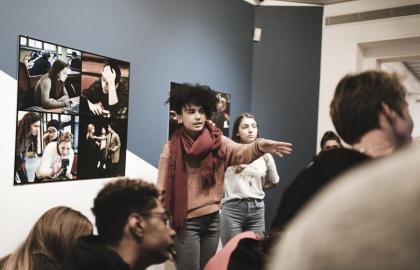
Guided Tours
Education
Secondary Education
Higher Education
Interactive guided tours for schools

Guided Tours
Secondary Education
Higher Education
Bellezza e Bruttezza – schools and youth associations (+12)

Individual
Highly Recommended
Guided Tours
Bellezza e Bruttezza - Highlights tour in French
Individual
Highly Recommended
Guided Tours
Bellezza e Bruttezza - Highlights tour in Dutch

Individual
Guided Tours
Bellezza e Bruttezza - Guided tours in Flemish sign language (VGT)

Individual
Guided Tours
Bellezza e Bruttezza - Guided tours in French-Belgian sign language (LSFB)

Highly Recommended
Kids’ Palace
Guided Tours
Bellezza e Bruttezza - Discovery Tour in French +6
Highly Recommended
Kids’ Palace
Guided Tours
Bellezza e Bruttezza - Discovery Tour in Dutch +6


Talks & Debates
Literature
Meet the Writer: Jakuta Alikavazovic


Watch ✕ Read ✕ Listen

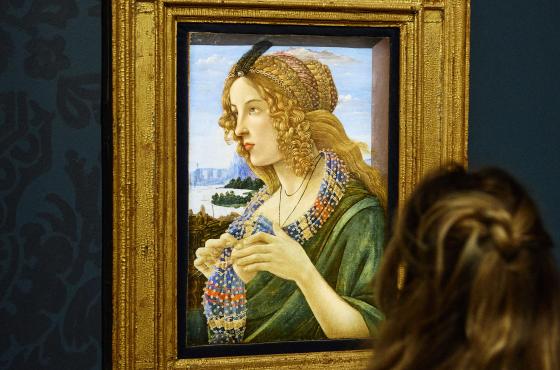

3 reasons to visit Bozar during the spring holidays


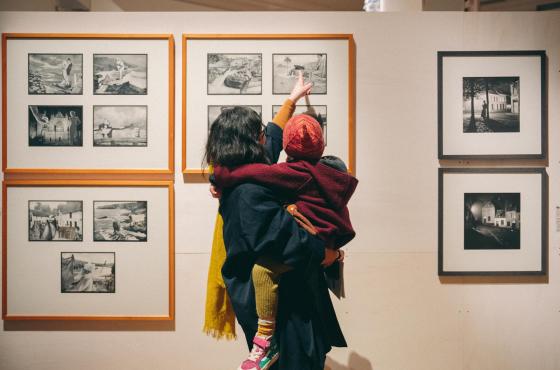
5 Reasons to Bring Children to an Exhibition at Bozar



Main partner
- Intesa Sanpaolo
Support
- Vlaamse Overheid
- SPF Affaires Etrangères / FOD Buitenlandse Zaken / Ministry Foreign Affaires / BUZA