How has Bozar, through its participation in European projects and networks, become a driving force for cultural cooperation across Europe, and how does that commitment influence the artistic richness of its programme?
Bozar’s ‘European’ activities enable it to support and promote projects by Belgian artists, as well as European and international initiatives. They showcase cultural diversity in all its forms and provide a platform for addressing both artistic and social themes – from sustainability and health to food, digitalization and relations with the Arab world.
Partnerships with the EU Council Presidencies offer a unique, six-month opportunity to discover a member state’s talent. Projects funded directly by the EU, on the other hand, run over several years and allow us to organize a wide range of artistic, professional and social activities. They encourage intensive, transnational collaborations with artistic, public and academic partners, both established and new.
We’ve participated in almost thirty European projects in just over a decade, involving dozens of partners across Europe, hundreds of supported artists and artworks, and thousands of citizens and communities. People have engaged in exhibitions, residencies, debates, concerts, workshops and performances. These collaborations often lead to lasting partnerships and long-term networks.

One of Bozar’s flagship European projects is PIT (Perform Inform Transform: Participatory Performance in Art Museums). What makes PIT so unique in terms of strengthening the relationship between the public and art institutions?
PIT is unique for a number of reasons. It is currently the only European collaborative project to focus on performance art’s (re)evaluation within museums and arts centres, as well as on its social and human dimensions, and to look at this from multiple perspectives. On an artistic level, PIT will support ten new co-productions until 2027. Moreover, by engaging in professional discussions and conducting research, experts can better understand and address the sector’s challenges. Within this project, Bozar is supporting, amongst other things, new works by European performance artists such as Némo Flouret (FR), Nico Jongen (ES) and Monica Valenciano (ES).
Let’s talk about Studiotopia 2.0, a collaborative project involving eleven European institutions that investigates the link between art and sustainable development through a transdisciplinary approach. How does this project translate into concrete action at Bozar? And why is this theme so important for an institution like ours?
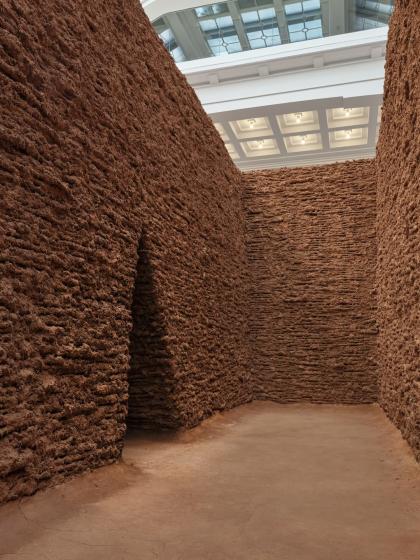
Studiotopia – now in its second edition – is an important project for Bozar because it supports new works, such as the installations by artists Delcy Morelos and Pauline Julier in 2026. It also provides a space for debates and film screenings by European and international artists such as Ana Vaz and James Bridle. The added value of projects like Studiotopia also lies in the fact that they encourage the institution to think more deeply about integrating values like sustainability into both its programming and day-to-day operations.

You are also participating in the European CARE project, which links culture to mental wellbeing. Why do you get involved in this kind of collaboration?
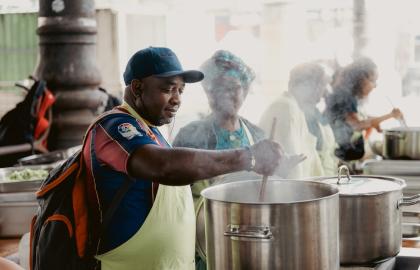
It is estimated that 85 million European citizens are currently struggling with mental health issues. CARE is a chance to develop transnational responses to this critical situation. Art certainly has a role to play. Through various project initiatives, we are experimenting with inclusive methods, ranging from cultural prescriptions via doctors to adapted exhibition visits and film screenings for people with mental, physical and/or social vulnerabilities.
With these three European initiatives, you appear to be strongly committed to democratic, ethical and inclusive values, in line with current geopolitical and social challenges. How do these projects fit within Bozar’s mission? And how do you believe culture contributes to Europe’s resilience?
Bozar has a clear social mission, in part thanks to these projects. Our multidisciplinary approach enables us to reach and connect with a diverse audience, spanning generations and communities. As a result, art becomes a means of fostering social cohesion and raising awareness of complex and diverse issues. In addition to the aforementioned initiatives, we are also committed to other transnational themes, such as gender equality in the Arab world through the Euro-Mediterranean project Halaqat, and access to healthy food for all through the European project, Beautifood. In this way, like many other cultural institutions, we contribute to resilience and social dialogue – both locally and internationally.

The Bozar teams are also very familiar with another type of European funding, namely the European Recovery and Resilience Plan, which has supported the digital development of your programme and infrastructure since 2021. How have these funds contributed to the institution’s transformation and resilience? And how do you, as a cultural centre, tackle digital challenges?
The European Recovery and Resilience Plan is the main source of funding for Bozar’s digital transformation, both artistically and operationally. One example is the ‘Bozar Digital’ programme, which incorporates new formats – such as virtual reality and artistic video games – into our ‘Bozar Arcade’. Moreover, we’ve invested heavily in our digital infrastructure, including the sound and lighting system in the Henry Le Boeuf Hall and new Enterprise Resource Planning (ERP) technology, which was designed by our operational departments.
We’ve also introduced a new ticketing system, tailored to our visitors’ needs, and strengthened our cybersecurity systems. The project has had an organizational-wide impact and gone hand in hand with staff training in digital working methods.
The benefits are obvious: staff work more efficiently thanks to digital tools, while the public can access our content more easily and enjoy digital art and high-quality, technology-based experiences.

Bozar and Brussels are situated in the very heart of the European Union, which means that the institution maintains a close connection to current international and diplomatic affairs. Every six months, Bozar dedicates part of its programme to the country holding the Presidency of the Council of the EU. What is the added value of these partnerships?
The cultural programmes around the EU Council Presidencies are an important part of Bozar’s activities. They allow the public to discover artists from different European countries and promote a pro-European vision based on cooperation and shared values. For Brussels, they provide a unique showcase for artists from other member states. The events are carefully integrated into the seasonal programme and developed in consultation with the authorities, cultural sector and civil society in the country concerned.
Finally, Bozar is a member of numerous Belgian, European and international cultural networks. What added value does this bring?
The transnational dynamic that Bozar fosters stems from its long-term commitment to these networks and from ad hoc collaborations. This involvement has demonstrated its impact on the organization’s strategic development. Bozar is an active member of networks such as the Brussels Arts Council, ECHO (European Concert Hall Organisation), Culture Action Europe, CIMAM, the European Festivals Association and IETM, amongst others. In addition, joint initiatives are regularly organized. For example, in February 2025, Bozar both supported and coordinated Culture: the Compass for Europe’s Future, together with Culture Action Europe, Europa Nostra and the European Cultural Foundation. During this policy debate, a proposal emerged to invest 2% of the EU budget in culture.
Funded by the European Union. Views and opinions expressed are however those of the author(s) only and do not necessarily reflect those of the European Union. Neither the European Union nor the granting authority can be held responsible for them.