A new addition to the orchestra
In 1846, Adolphe Sax, who was born in Dinant, applied for a patent for his latest invention: the saxophone. Like its predecessor, the saxhorn, this brass wind instrument was embraced by military bands in the second half of the 19th century, but was also embraced by street bands – who stood at the cradle of jazz – in the same period. It was only a matter of time before ‘classical’ composers followed suit. They could choose from a large family of instruments, from low to high: bass saxophone, tenor saxophone, alto saxophone and soprano saxophone.
French composer Hector Berlioz kept a close eye on Sax’s developments and praised the new instrument’s rich, warm and powerful sound. His Chant Sacré (Sacred Song) for wind quintet is one of the earliest examples of classical music featuring a part for saxophone. Far better known is the nostalgic saxophone solo that Maurice Ravel wrote for his orchestration of Pictures at an Exhibition (on 24/11 with The Munich Philharmonic) and George Gershwin’s sumptuous fusion (on 14/3 with Branford Marsalis). On 26 March, you’ll even discover a full-blown Concerto for Saxophone performed by the Belgian National Orchestra.
Jazz Ambassador
With the power of a brass instrument and the lyricism of a woodwind, the saxophone started to appear in jazz from the 1910s onwards. Although he always denied it himself, Coleman Hawkins is regarded as the musician who, by daring to deviate from the main melody, introduced the (tenor) saxophone as an expressive tool for improvisation. Just listen to the playful improvisations on Body & Soul from 1939. The virtuoso was revered by his contemporaries: Lester Young – ‘The President of the tenor saxophone’ – paved the way for cool jazz with his nonchalant, mellow improvisations, whilst Charlie Parker employed the sharper, more biting sound of the alto saxophone to bring colour and speed to the restless bebop. The saxophone as a catalyst of jazz history!
John Coltrane
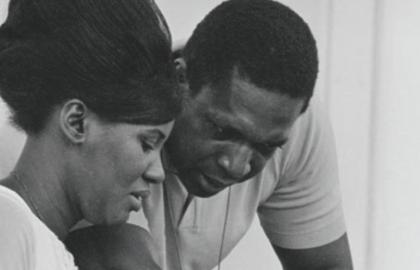
And then, of course, there was John Coltrane, who set new standards on the tenor saxophone and the then almost-forgotten soprano saxophone. You’ll certainly recognise My Favourite Things (1961), on which the soprano saxophone sounds more like an Arabic instrument than anything else. This season, Bozar is celebrating 100 years of Coltrane with a stellar line-up of saxophonists. Walter Smith III joins forces with pianist Aaron Parks to explore Coltrane’s lyrical ballads. A star-studded line-up featuring the saxophonist Joe Lovano will pay tribute on 11 November. In March, Ravi Coltrane (John’s son) celebrates the work of his mother, Alice Coltrane.
The saxophone today and tomorrow
Whether in jazz or classical music, or in the vast territory in between, a young generation of musicians sees the saxophone as an indispensable partner in exploring new sounds. Electronics, MIDI harmonisers and looping stations frequently enter the mix. Think of Laura Misch, Shabaka, Alabaster Deplume or Sam Gendel. On 27 November, the latter is performing with guitarist Sam Wilkes, presenting his intimate blend of distorted saxophone layers, minimalist basslines and lo-fi electronica. Closer to home, we’ve followed Mattias De Craene for years, but have recently discovered a fresh, original voice in Adia Vanheerentals. On 8 October, Vanheerentals – a Klara Twintiger – presents her latest album, Taking Place, born out of dialogues with her surroundings in the unlikeliest of places: an empty silo, a chicken coop or beside a stream.
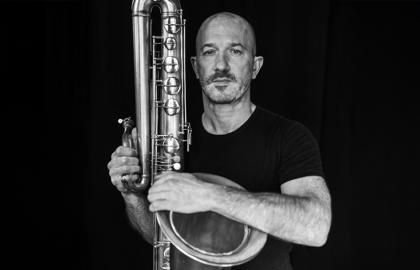
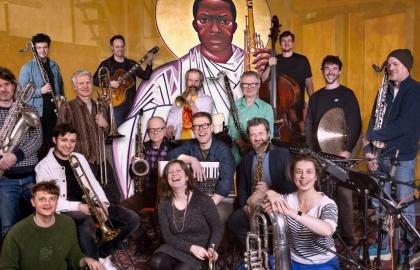
On 19 June, just as our concert season is almost giving way to summer, Colin Stetson makes his appearance. The favourite saxophonist of Bon Iver, Feist and Laurie Anderson, amongst others, mesmerises us with repetitive melodies on the bass saxophone. Thanks to circular breathing techniques, the music never stops. Following his solo set, Bl!ndman performs Louis Andriessen’s seminal 1975 piece, Workers Union, using nothing but saxophones.
Check out the concerts below in which the saxophone steals the show.